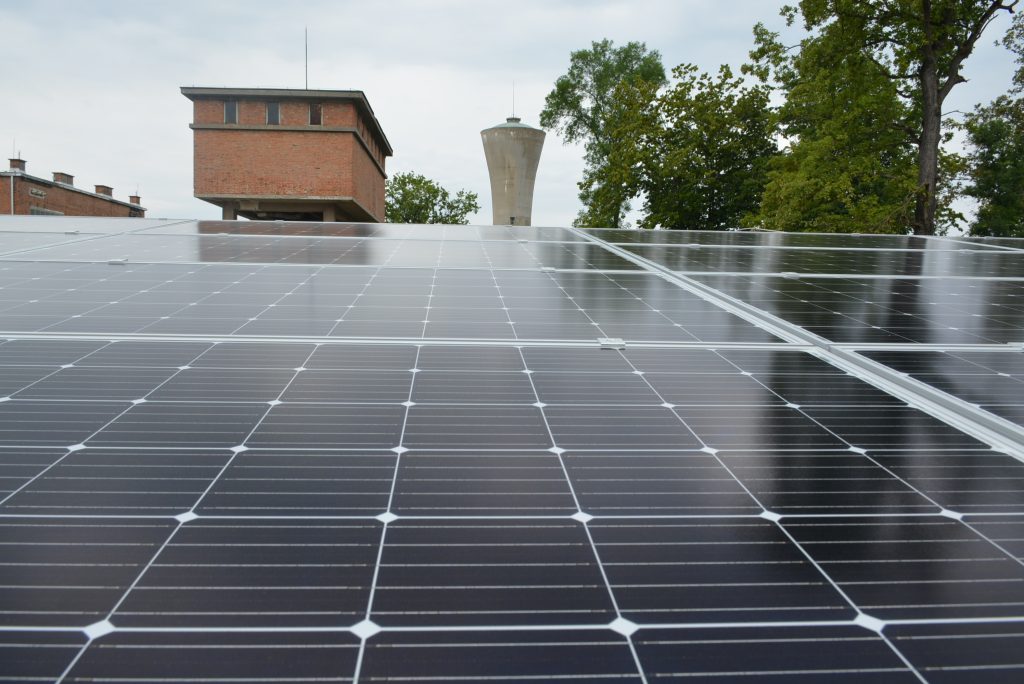
The solar energy sector in 2025 is experiencing a technological and market revolution. Here’s a look at key trends shaping the industry, making solar power more accessible, efficient and sustainable than ever before:
Advanced PV Technologies
Developments in photovoltaic (PV) technology are driving the advancement of the solar industry and are reducing the cost and increasing the efficiency of solar panels. This recent trend in solar energy is expected to continue into 2025 and beyond, leading to solar panels that produce more energy per unit of installed area. Incorporating new, more efficient materials, such as perovskite solar cells, which can achieve 30% efficiency levels, into solar panel manufacturing is one method that manufacturers are using to improve panel performance.
Scientists and researchers are also exploring new methods of harvesting solar energy by developing solar cells integrated into PV glass windows and other building components. Building-integrated photovoltaics, or BIPVs, are solar cells that can harvest solar energy while preserving the functionality of conventional building materials.
In addition, the development of thin-film solar technology will lower the cost of solar panels. Compared to conventional silicon panels, thin-film solar panels, which are made from a range of materials including cadmium telluride (CDTE) or copper indium gallium selenide (CIGS), are less expensive and require less energy.
Integration with AI and IoT
Artificial Intelligence (AI) and the Internet of Things (IoT) are increasing the efficiency and management of solar energy systems. AI-driven analytics optimize energy production, reduce energy losses, predict maintenance needs and facilitate network integration. IoT devices enable real-time monitoring and management of solar systems, from residential rooftops to large-scale solar farms.. This convergence leads to smarter, more reactive solar installations.
Extended energy storage solutions
Energy storage technologies are becoming increasingly crucial to maximizing the potential of solar energy as it continues to gain traction. Energy is generated only when the sun is shining, which creates sporadic solar power. Efficient energy storage systems are needed to store additional energy for use on cloudy days or at night to ensure a constant and reliable power supply. Recent advances in lithium-ion batteries have greatly improved the efficiency of solar energy storage. These batteries are perfect for solar systems because they are small, strong, and have a high energy density. On the other hand, solid-state batteries are also gaining popularity as they are expected to provide even more safety features and energy storage capacity than their lithium-ion counterparts. By pushing the boundaries of energy storage, these developments will enable more efficient and secure storage of solar energy.
The importance of AI-optimized power systems in monitoring massive solar installations cannot be overstated. These days, artificial intelligence is being used to automate the distribution of solar energy across grids, improve energy storage, and predict energy demand. In decentralized grids, where solar energy is generated locally and stored for later use, AI can also help manage the grid. By ensuring efficient energy transfer from source to consumer, this technology reduces waste and improves grid reliability.
These developments make solar energy a more practical and sustainable choice for both large-scale and residential use. The future of solar energy appears to be more promising than ever as we continue to advance energy storage technology and use AI.
Growth of floating solar farms
Floating solar farms are emerging as a superior way to optimize solar power generation without using expensive land. These solar farms provide a distinctive alternative to conventional land-based solar installations as they are located on bodies of water, such as lakes, reservoirs and ponds.
The land-saving capacity of floating solar farms is one of its main advantages. These solar arrays contribute to the conservation of urban or agricultural areas for other purposes by using water surfaces rather than land. Furthermore, a major factor in increasing the efficiency of the panels is the cooling effect provided by the water below them. The water serves as a natural cooling system, lowering the operating temperature of the solar panels and increasing their overall performance as high temperatures can cause them to overheat and lose efficiency.
Building-integrated photovoltaics (BIPV)
BIPV is rapidly growing thanks to innovations in flexible and visually appealing solar solutions. They are built into building structures, acting as a useful building element in addition to a renewable energy source. BIPV solar panels are specially designed to fit into the architecture of the building and replace typical building materials, unlike standard solar panels that are placed separately on roofs or ground arrays. Buildings can generate power while fitting into their surroundings, which represent a sustainable way to incorporate renewable energy into the built environment.
Transparent solar panels
Partially and fully transparent solar panels are transforming the way we think about solar energy in urban environments. These panels can be integrated into windows and facades, allowing buildings to generate solar energy without compromising design or space. Buildings can now generate solar electricity without sacrificing space or design. The panels contribute to sustainable architecture by reducing a building’s dependence on external energy sources, while simultaneously generating renewable energy while preserving the usability and visual appeal of the structure. For architects and urban planners who want to design green, energy-efficient structures, they provide a smart and environmentally responsible alternative.
Lower costs and greater accessibility
One of the main reasons for the widespread use of solar energy is the reduced cost of solar panels. Production costs have fallen significantly in the last decade due to advances in material and manufacturing technology. As a result, solar energy is now more accessible to both businesses and consumers, accelearting its integration into global energy grids. Mass production and ongoing innovation reduce entry barriers even further
Another important factor in reducing installation costs is government incentives. By partially offsetting the initial installation costs, subsidies, tax breaks, and grants promote the use of solar energy in commercial and residential settings. These financial incentives contribute to the mainstream adoption of renewable energy by making solar power more attractive and practical for a wider range of customers.
Integration with electric vehicles (EV’s) and EV chargers
Electric vehicles (EVs) are gaining popularity due to their potential to reduce global reliance on oil and CO2 emissions. Non-conventional energy sources replace petroleum-based vehicles, reducing ozone-depleting substances and reducing emissions of pollutants such as NOX and SO2. Except for cars, E-bike innovation is also growing, with a growing range of lightweight electric vehicles challenging traditional bicycle categories. While China dominates the EV market, contracts are growing in other countries. Improvements in battery technology and creative product design will lead to a wider range of vehicles with lighter weight and improved performance. A solar-powered tricycle for physically challenged individuals is an example of an ecological solution. Many countries offer subsidies for EV registration promoting and facilitating financially the process of switching to electric.
EV chargers connected to solar panels and battery storage are becoming standard in new developments. This means that when buying or moving to a new property, we already have the entire infrastructure for our electric vehicle solved or, if we don’t have it, it will certainly make the decision to switch to electric easier.
Community solar projects and decentralized energy
People who may not be able to install their own solar panels can now access shared energy through community solar projects, which are becoming increasingly popular. Community solar allows people with suitable rooftops (renters, small businesses) to access solar power through shared projects, lowering costs and increasing energy indpeendence. Also, community solar projects provide a way to electrify rural regions where grid infrastructure is not readily available. These communities can access clean, renewable energy without having to pay for expensive individual installations by combining their resources. Furthermore, decentralized microgrids enhance local resilience against power outage.